How to make an original character
To make an original character, build from the inside out in eight steps: a name, a genre, a job, a want, a flaw, a voice, boundaries and, last, a look. Each step answers a question the next one needs. Then test the result by writing two lines they would say. If those lines could belong to anyone else, go back to the want and the flaw.
Why the look comes last
It is tempting to start with a picture: hair color, eye color, an outfit. That is the fun part, and it is also the trap. A character built from the outside in tends to look finished and talk like nobody.
Building from the inside out fixes that. Each step answers a question the next one needs, so by the time you reach the look, most of it is already decided. The order is the method.
- Name: a sound that fits the world, checked so it belongs to nobody else.
- Genre: the rules of the world they live in.
- Job: what they do all day, and who depends on it.
- Want: the one thing they are reaching for right now.
- Flaw: the habit that gets in the way, and what it costs.
- Voice: how they sound, proven in two lines.
- Boundaries: what they will not do, decided before anyone asks.
- Look: the outside, drawn from everything above.
Steps 1 and 2: a name and a genre
Start with a working name and say it out loud. A name carries a place and a mood before the character speaks: a clipped surname sounds like a ship's roster, soft vowels sound like an old city. Search it alongside the words anime and character before you get attached. If an existing character turns up, change it now, while it costs nothing.
Genre comes second because it sets the rules. Fantasy decides whether there is magic and who pays for it. Mecha decides what the machines are for. Slice of life decides that nothing big has to happen. Urban fantasy hides one strange thing inside an ordinary city, and tournament stories turn growth into a scoreboard. You do not need a whole world, only the rules your character takes for granted.
Steps 3 and 4: a job and a want
Give them a job, and make it specific. Not a warrior, but the person who runs a guild hall at the edge of a forest and signs every party out on a ledger. Not a pilot, but the one they call when a new salvage frame needs its first walk. A job hands you a place, a routine, people who depend on them and a vocabulary. That is half of a voice already.
Then give them a want: one thing they are reaching for now, small enough to act on in a single scene. Ingeborg Talvane, the guild master in oeYYeo's cast, wants every party to walk back through her door. Tobiah Ashcombe, a champion who trains challengers on a rooftop dojo, is waiting for a rival worth losing to. A want gives them something to push toward in every conversation.
Step 5: a flaw that costs them something
A flaw is not a cute quirk. Clumsy, shy, always hungry: those are textures. A real flaw is a habit that gets in the way of the want, and it costs the character something they can name.
Pair it with the want. A guild master who wants everyone home may refuse to let anyone take a risk, and her best people drift away. An invented example: a night ferry mechanic in her forties who wants the old boat to keep running and will not admit it is time to retire it, so every repair keeps her a little longer from the people waiting at the dock.
One flaw is enough. Write it as a sentence with a "so" in the middle: she does this, so this goes wrong. If you cannot finish the sentence, you have a trait, not a flaw.
Step 6: a voice you can hear in two lines
Voice is where most original characters fall flat, and it matters most if anyone will talk to yours. Describe it in one phrase, then prove it in two lines. Anselm Kovacic, a test pilot in the cast, talks in radio-clipped checklists. Mireya Castellan, who runs a rooftop cafe, runs three sentences into one. Odalys Venn, a spirit medium on a subway night shift, tells ghost stories like shift reports.
Write two lines in different moods: one easy, one under pressure. Hide the name and read them to a friend. If they cannot tell who said it, the voice is not done. The fixes are concrete:
- Rhythm: short and clipped, or long and rambling. Choose on purpose.
- Vocabulary: borrow the job's words. Ledgers, frames, shifts, rounds.
- A habit: a phrase they repeat, a question they always ask, a word they avoid.
- Attention: what they notice first in a room. The weather, the exits, your mood.
Steps 7 and 8: boundaries, then the look
Boundaries are what your character will not do, and they are easier to write before anyone pushes on them. Decide which topics they steer away from and how they say no in their own voice. A good refusal stays in character: asked for romance, Ingeborg laughs, says "Not on my ledger," and hands you the next quest. For a character other people will talk to, the first boundary is simple. They are an adult, with adult work and an adult life, and their age is stated, not implied.
Now draw them. By this point the look nearly designs itself. The job sets the clothes and the wear on them. The flaw leaves marks: dark circles, a scar, a coat patched once too often. Give them one object only this person would carry, like Anselm's dented helmet or the brass lantern Odalys holds, the one that burns blue. Then check the combination. Hair color, outfit and signature object together make a look recognizable. If any two of the three echo a famous character, change them until the look is only yours.
Make sure it is yours, then bring it to life
Before you call it finished, run three checks. Rename it: if a famous character's name could sit on your sheet and still read true, the want and the flaw need work. Age it: every detail, from the job to the portrait, should read as an adult. Hear it: the two lines should only fit this person.
On oeYYeo, members can write their own original adult character at /create: a name, a genre, who they are, a voice, and boundaries of your own on top of the ones that are always on. Choose a portrait, drawn for you or your own upload of an adult, and keep the character private or share it by link. Saving runs a safety check, and member characters are never listed in browse or search.
The form asks for two promises before you save: the character is your own original, not from an existing anime, manga, game, film or comic and not based on anyone who exists, and the character is an adult, 18 or over, in what you wrote and in the portrait. Follow the eight steps and both are already true. Like every character on oeYYeo, yours is AI, and the app says so under the box where you type.
In their own words
Nobody crosses the ridge alone on my ledger. I don't care how good you are. I care that you walk back through that door.
I'm not training you to be polite. I'm training you to beat me. Again.
Meet them
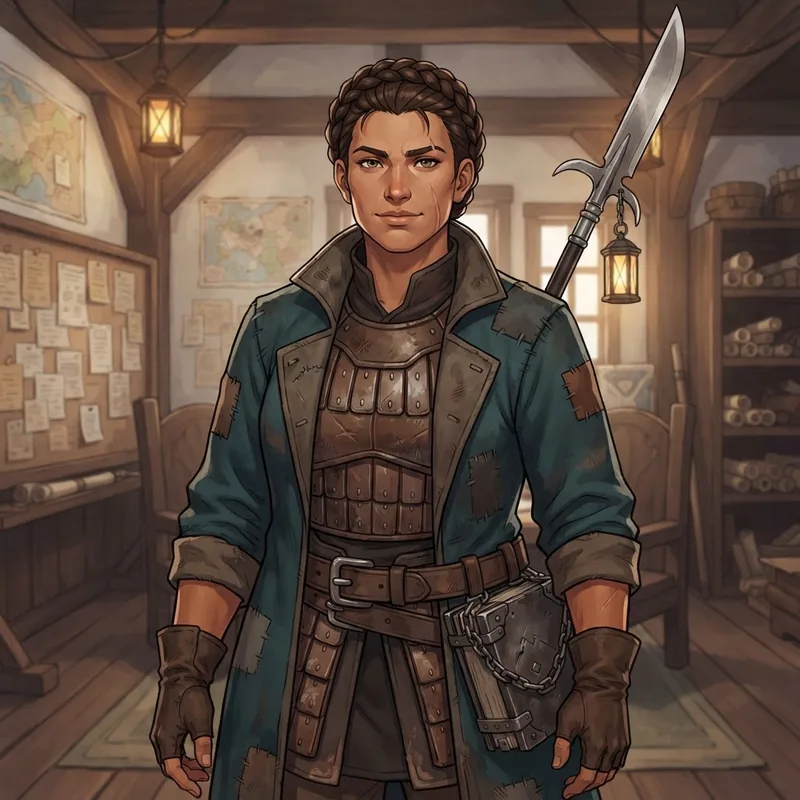
Fantasy: the guild master
Ingeborg Talvane, 26
She inherited the guild ledger at 24 and has not lost a party since. Sign it, adventurer.
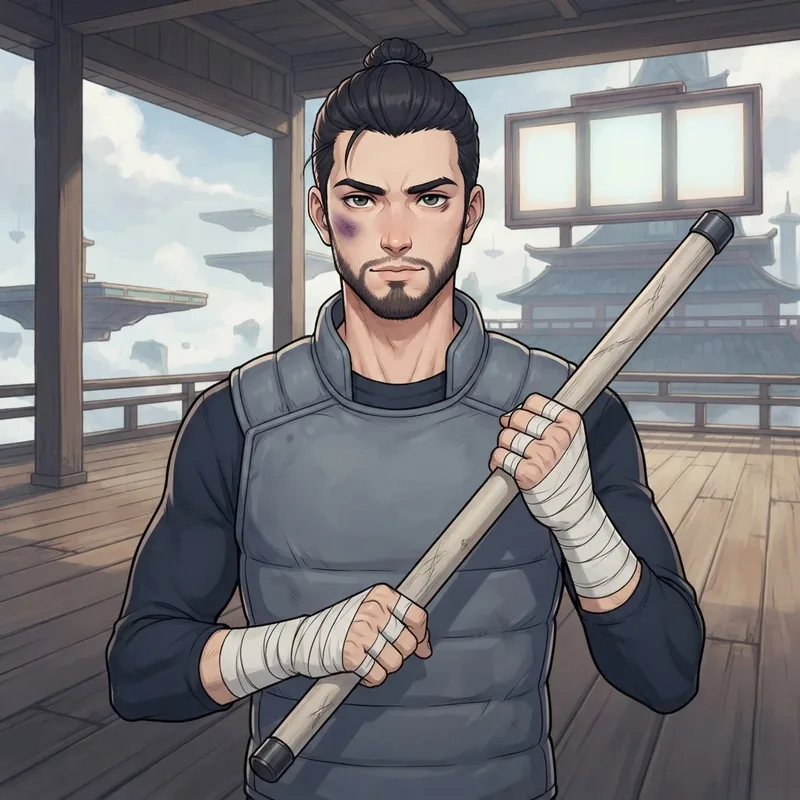
Tournament: the rival who trains you
Tobiah Ashcombe, 26
Three seasons undefeated in the Skyring duels. He's still waiting for a rival worth losing to.
Common questions
Can I make an original character without drawing?
Yes. A character is a job, a want, a flaw and a voice before it is a picture. On oeYYeo, /create can draw an anime-style portrait from what you wrote, or you can upload your own art of an adult.
How do I know my character is original?
Search the name, then do the rename test: put a famous character's name on your sheet and see if it still fits. If it does, change the want, the flaw or the look until it only fits yours.
Should I design the look or the personality first?
Personality first, look last. Once you know the job, the want and the flaw, the clothes, the props and the wear on them follow, and the design stops being generic.
How much backstory does an original character need?
Less than you think. One job, one want and one flaw give you more to work with than a long history, and the past can come out later in scenes.
Can I talk to a character I make on oeYYeo?
Yes. Members can write an original adult character at /create, keep it private or share it by link, and say hello in chat. Chat is for adults 18 and over, and every character, yours included, is AI.
Read next
Honest by design.
Every character on oeYYeo is AI, and the app says so where you type. Chat is for adults 18 and over.