Character traits list
Character traits are the lasting qualities that decide how a character acts under pressure: strengths, flaws, and neutral traits that cut both ways.
- Three traits and one flaw already make a believable person.
- Show each trait in an action, not an adjective.
- Give every strength a shadow: the way it fails.
Roll three traits and a flaw
Three traits
- resourceful
- calm
- optimistic
And a flaw
spends money they do not have
Positive character traits
A strength is only interesting when it costs something to use. Loyalty matters when leaving would be easier; patience matters when everyone else is shouting. Pick strengths your character will be tested on, and the story writes itself around the test. These are the ones that show up most often in the characters people remember:
- Loyal: stays when staying costs them.
- Curious: opens the door everyone else walks past.
- Patient: waits for the right moment, even when it hurts.
- Brave: acts while afraid, not instead of being afraid.
- Generous: gives time, food or credit without keeping score.
- Observant: notices the scuffed boot and the unpaid tab.
- Disciplined: does the drill on the days nobody is watching.
- Warm: makes a stranger feel expected.
- Resourceful: fixes it with what is in the room.
- Honest: says the true thing, then stays for the reaction.
- Protective: steps between a friend and the trouble.
- Witty: turns a bad moment with one line.
| Trait | How it shows in a scene | The flaw it turns into |
|---|---|---|
| Loyal | Stays at the table after everyone else has left | Holds a grudge for anyone who did not |
| Curious | Asks the question nobody else dared to | Opens the door that should have stayed shut |
| Patient | Lets the other person finish, then answers | Waits too long to act |
| Brave | Walks into the dark first | Turns reckless when bored |
| Generous | Pays for everyone's dinner without a word | Cannot say no |
| Observant | Notices the unpaid tab and the shaking hand | Reads too much into everything |
| Disciplined | Does the drill at dawn, alone | Cannot rest, even when it is over |
| Warm | Remembers your order before you sit | Puts everyone first, and themselves never |
| Honest | Says the hard thing kindly | Says it in the wrong room |
| Protective | Steps between a friend and trouble | Decides for people what they can handle |

Character flaws list
A flaw is what goes wrong when the character is tired, scared or proud. It should cost them something real: a friend, a chance, a fight they could have won. Flaws written as habits are easier to play than flaws written as labels, so this list is written the way you would see it happen:
- Holds a grudge for years.
- Cannot ask for help, even when drowning.
- Lies when cornered, then has to keep the lie going.
- Takes on too much and drops the one thing that mattered.
- Trusts too fast.
- Needs to win every argument, including the small ones.
- Hides behind jokes when it gets serious.
- Runs from hard conversations.
- Is proud past the point of sense.
- Says yes to everything, then lets people down.
- Keeps everyone at arm's length.
- Loses their temper at unfairness, in the wrong room.
Neutral traits that cut both ways
Some traits are a strength in one scene and a flaw in the next, and they are often the most fun to write. Stubborn finishes the job and also refuses the better plan. Proud keeps standards high and also refuses help. Cautious keeps the crew alive and also misses the moment.
Blunt, competitive, private, intense and impulsive work the same way. Give your character one of these and let the scene decide which side shows. Tobiah Ashcombe, the champion on oeYYeo's cast, is competitive to the bone, and he spends his off seasons training challengers to beat him. That is the same trait pointing two ways.
How to choose traits that work together
Three strengths and one flaw is the smallest set that already makes a person. More than that and nobody can keep track; fewer and the character reads flat. Choose them as a set, not one at a time.
- Tie one trait to their job. A guild master who has not lost a party is careful for a reason.
- Make one trait surprising. A champion who is gentle with beginners is more interesting than a champion who is only fierce.
- Let the flaw grow out of a strength. Loyal becomes holds a grudge; disciplined becomes cannot rest.
- Check the set against a scene. Put them in a crowded room with a problem and ask what each trait makes them do.
Show traits in a scene, then try them out loud
Readers believe what a character does, not what the narrator says about them. Instead of writing that a cafe owner is warm, show her saving the window seat for a regular before he walks in. Instead of writing that a pilot is disciplined, have him read the checklist out loud on his hundredth flight.
The fastest test of a set of traits is to hear the character use them. Roll three traits and a flaw above, build a whole character from them, and open it in the creator. Saving needs a free account. Every character on oeYYeo is AI, and every one is an original adult.
In their own words
You are stubborn. Good. Stubborn finishes the drill. Now be stubborn about your footwork.
Meet Tobiah
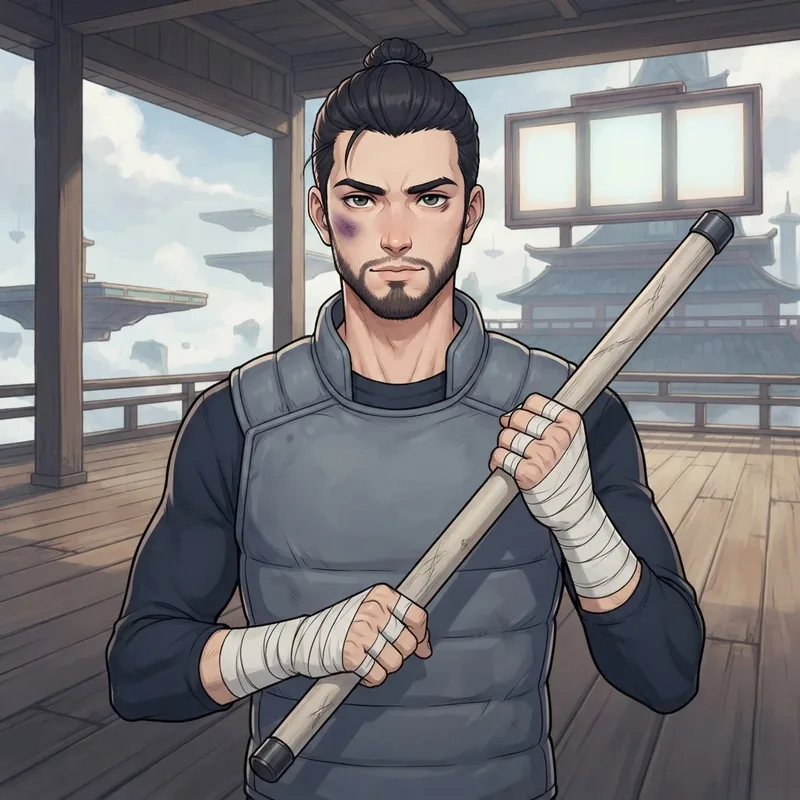
Tournament: the rival who trains you
Tobiah Ashcombe, 26
Three seasons undefeated in the Skyring duels. He's still waiting for a rival worth losing to.
Common questions
How many traits should a character have?
Three strengths and one flaw is a good start. It is enough to predict what they do in a scene and few enough to remember.
What is the difference between a character trait and a flaw?
A trait is any lasting quality. A flaw is a trait that costs the character something, usually at the worst possible moment.
Are personality traits and character traits the same thing?
Mostly. Personality traits describe a person; character traits are the ones a writer chooses to put under pressure in a story.
What makes a good character flaw?
One that grows out of a strength and costs something real. Loyal turning into a grudge is better than a flaw added at random.
Read next
Honest by design.
Every character on oeYYeo is AI, and the app says so where you type. Chat is for adults 18 and over.