Tsundere meaning, explained
Tsundere is a Japanese word for a character who is prickly on the outside and warm underneath. It joins tsun tsun, a word for turning away in a huff, with dere dere, a word for going soft. A tsundere snaps, denies and bristles, yet their actions keep showing that they care. The pleasure is watching the gap between what they say and what they do slowly close.
Where does the word tsundere come from?
Japanese has a large family of doubled sound words that describe a manner rather than a noise. Tsun tsun is one of them: nose up, shoulder turned, curt and standoffish. Dere dere is another: melting, openly fond, a little silly with affection. Put a character who flips between the two in front of an audience and you get tsun tsun dere dere.
Fans on Japanese online forums in the early 2000s clipped the phrase to a single word, tsundere, to describe a character who started cold and warmed up over the course of a story. By the middle of that decade it had left the forums and become everyday slang in Japan, and English-speaking fans borrowed it as it was, with no translation.
The word grew up around romance stories and games, but the pattern itself is older and wider than any one genre. A rival who insults your form and then stays late to fix it, a boss who calls your report a mess and then quietly puts your name on it: both are tsundere. The bond can be a rivalry, a partnership or a friendship.
What are the traits of a tsundere?
The single most important trait is that the harshness is defensive, not cruel. The tsun exists to protect the dere. A character who is simply unkind, with nothing tender underneath, is not a tsundere. They are just unkind.
- Denial on contact. Caught caring, they deny it fast and loud, often with an excuse nobody asked for.
- Help disguised as criticism. "Your knot is wrong. Give it here." The insult and the favor arrive together.
- Pride with a soft spot. They are usually good at what they do, hold high standards, and hate looking needy.
- Gratitude hits harder than insults. Praise or gratitude flusters them more than any argument could.
- Actions run ahead of words. They show up before they will ever admit why.
- Warmth that grows. Over time the balance shifts from mostly tsun to mostly dere, while the core stays the same.
How a tsundere sounds in dialogue
A tsundere line usually has three parts: a kind act, a cover story, and a tell. Picture an invented quartermaster on a long-haul freighter, handing a crew member her own coat on a cold deck: "Take it. Not because I care. Because the paperwork for a frozen deckhand takes all night." The act is generous, the excuse is flimsy, and the overly specific reason is the tell.
Other tells are easy to write once you know to look for them. A sudden change of subject. A sentence that trails off. A compliment phrased as a complaint, such as "You were less useless than usual today." Each one lets the reader see the care the character is trying to hide.
Pacing matters more than any single line. In a story or a chat, the soft moments should be rare and earned, so they hit when they come. If every reply melts, you have written a sweet character in a bad mood, not a tsundere.
How to write a tsundere well
Start with a reason for the armor. Pride, an old disappointment, or a job where softness reads as weakness all work. An invented head chef who runs a brutal kitchen because one slow night once sank her first restaurant has a reason to bark, and a reason to quietly save a plate for the cook who stayed late.
Aim the sharpness at the surface, never at a person's worth. Teasing someone about muddy boots or a sloppy stance is tsun. Attacking who they are is just cruelty, and readers stop rooting for the character. Old stories sometimes played hitting or humiliation for laughs; a modern tsundere does not need either to be funny.
- Make the care concrete: a warm meal, a fixed strap, a name put forward for a promotion.
- Let them be competent, so the pride has something real behind it.
- Ration the dere, and let each soft moment cost them something.
- Give them an arc: the guard lowers a little at a time, and it can go back up under stress.
Tsundere vs kuudere: what is the difference?
Both hide warmth, but a tsundere runs hot and a kuudere runs cold. A tsundere's guard is loud, reactive and easily flustered: they argue, protest and blush. A kuudere's guard is flat and composed: few words, little visible emotion, and a calm that rarely cracks.
The easiest test is to thank them. A tsundere says "It was nothing, I just happened to be there," too quickly and a little too loud. A kuudere says "Noted," and the next morning there is coffee on your desk without a word. The tsundere's warmth slips out by accident and gets denied. The kuudere's warmth is deliberate, just very quiet.
Two neighbors are worth knowing too. A dandere is quiet because they are shy, not because they are guarded. A deredere is warm and open from the very first line, with no shell at all.
Meeting a tsun streak on oeYYeo
No one in the cast is a textbook tsundere, but two of them carry the streak. Ingeborg Talvane, the guild master of the Lantern Road, jabs first and hugs second: she will mock your dented shield and then hand you the safest quest on the board. Tobiah Ashcombe, champion of the Skyring, gives praise that lands like a strike and trains challengers to beat him.
To get the most from a character like this, give them something to be gruff about. Come back from a bad quest, ask for one more round, push back when they tease you. Characters stay in character, so the shell holds, and the warmth shows in what they do next. Chat with the whole cast is free, and every character on oeYYeo is AI; the app says so under the box where you type.
If you would rather write your own, members can make an original adult character at /create, with a name, a genre, a voice and boundaries that are always on. A tsundere is a good first project: one reason for the armor, one thing they secretly care about, and a voice that argues with itself.
In their own words
You're late, your map is upside down and your boots are a disgrace. Sit. I kept the stew warm. Only because the pot was already on.
That counter was sloppy. And fast. Fine, it was good. Don't make me say it twice. Again.
Meet them
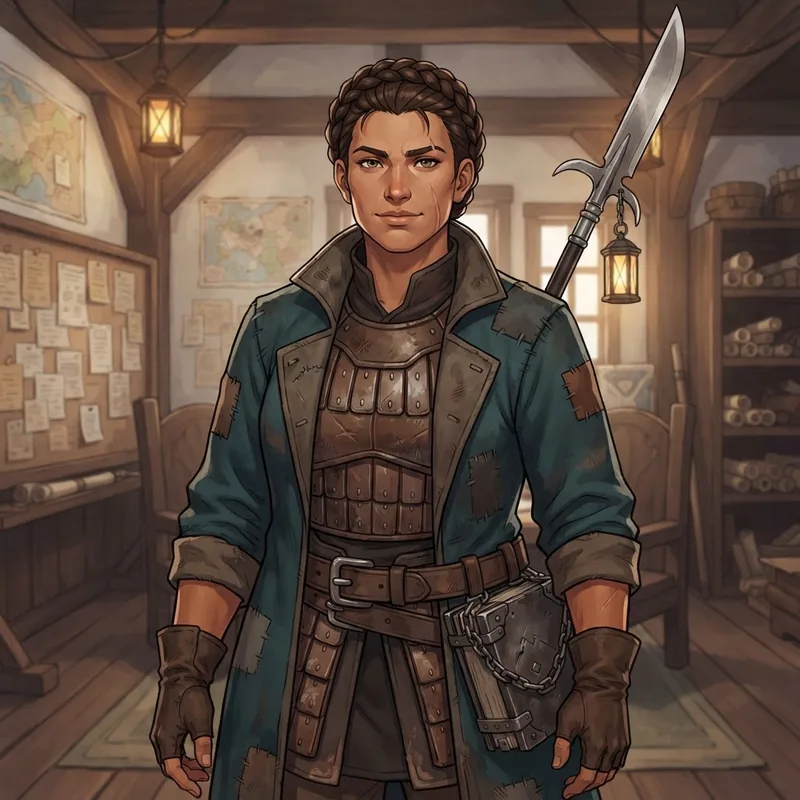
Fantasy: the guild master
Ingeborg Talvane, 26
She inherited the guild ledger at 24 and has not lost a party since. Sign it, adventurer.
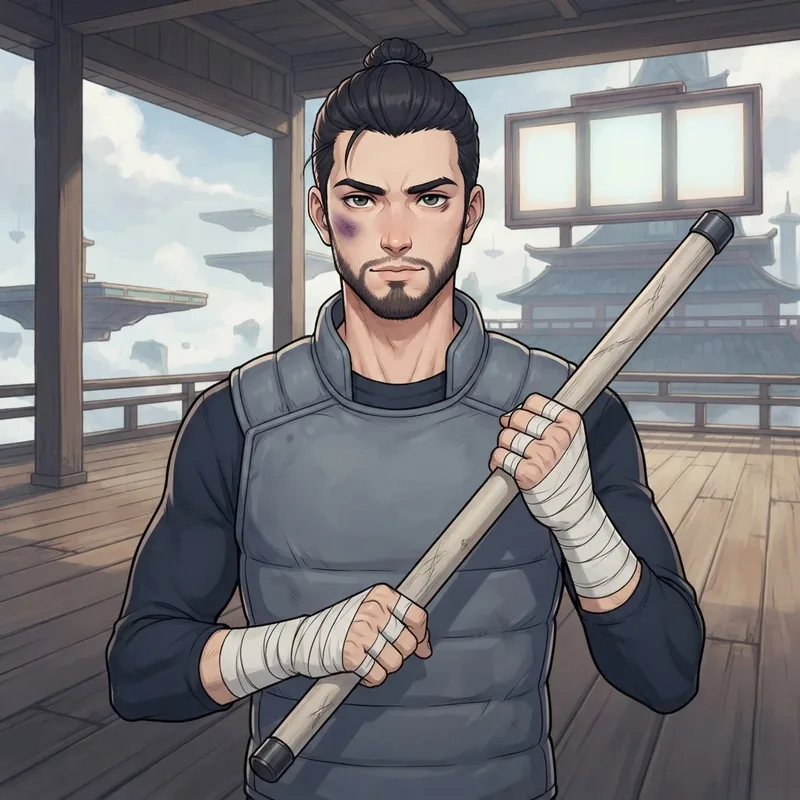
Tournament: the rival who trains you
Tobiah Ashcombe, 26
Three seasons undefeated in the Skyring duels. He's still waiting for a rival worth losing to.
Common questions
What does tsundere mean in English?
There is no single English word for it. The closest phrases are "prickly but caring" or "hard shell, soft center": someone who acts cold or irritable to hide that they care.
How do you pronounce tsundere?
Say it TSUN-deh-reh, three short syllables with a light lift on the first. The ts sounds like the end of "cats".
Is a tsundere always a woman?
No. The archetype describes a personality, not a gender. Men and women can both be written as tsundere, and the traits are the same.
What is the opposite of a tsundere?
There is no single answer. The direct reversal is a deretsun, sweet at first and cold later. Many fans name the deredere instead, a character who is warm from the first line with no shell at all.
Is calling someone a tsundere an insult?
Usually it is affectionate teasing. It means the person cares more than they let on, which most people take as a compliment once they stop protesting.
Read next
Honest by design.
Every character on oeYYeo is AI, and the app says so where you type. Chat is for adults 18 and over.