What does kawaii mean?
Kawaii (said kah-WAH-ee) is the Japanese word for cute, and the name for an aesthetic and an attitude built around it.
- The look: soft pastels, round shapes, small charms.
- The attitude: delight and gentleness, chosen on purpose.
- Grown adults wear it, at work and at home.
- Kakkoii, cool, is its usual opposite.
Where does the word kawaii come from?
Kawaii is written かわいい, sometimes 可愛い. It grew out of an older form, kawayushi, which carried a mix of tenderness and pity: the feeling of something so small or fragile it is almost hard to watch. Over a long stretch of time the pity faded and the tenderness stayed, and by the modern era the word simply meant lovable, then cute.
English borrowed it in the late twentieth century along with the fashion, design and fan culture that carried it abroad. In English it usually means a particular style. In Japanese it is still an everyday word: people say it about a coffee cup, a dog, a font, a pair of shoes or a friend's new haircut.
| Feature | Kawaii | Kakkoii |
|---|---|---|
| Means | Cute, lovable | Cool, stylish |
| Look | Soft, round, pastel | Sharp, sleek, dark |
| Feeling | Warmth and delight | Admiration and edge |
| Said about | A cup, a dog, a font, a friend | A car, a jacket, a move, a friend |
Kawaii as an aesthetic: what it looks like
In the 1970s a rounded, bubbly style of handwriting spread across Japan, and design followed it: rounder shapes, softer colors, faces drawn onto ordinary things. Shops filled with stationery, bags and charms that looked friendly on purpose. Street fashion in Tokyo's Harajuku neighborhood later took the same instinct and made it bold. The common marks:
- Soft color. Pastel pink, mint, butter yellow and sky blue, often all at once.
- Round shapes. Corners softened, lines thick and simple, nothing sharp.
- Small things. Charms on a bag, stickers on a laptop, a tiny plant on a desk.
- A face on everything. A cloud, a rice ball or a coffee cup with two dots and a smile.
- Sweetness as decoration. Cakes, candy colors and frosting shapes, worn and not only eaten.
Kawaii as an attitude
Kawaii is more than a palette. As an attitude it means choosing delight and gentleness on purpose, in a world that often rewards being hard. It says that warmth is not weakness and that a small joyful thing is worth having around.
That is why it is common among grown adults. A structural engineer in her thirties keeps a row of tiny enamel pins on her hard hat. A night-shift nurse has a plush bear clipped to his badge so frightened patients have something to look at. A bank manager decorates her calendar with stickers and runs a very tight branch. None of them is pretending to be younger. They are adults who like cute things and are not embarrassed about it.
Kinds of kawaii
Kawaii has grown sub-styles, each with its own name built on the word. A few you will meet:
- Yume-kawaii, dreamy cute: pastel skies, unicorn colors and soft, floating shapes.
- Kimo-kawaii, creepy cute: something a little gross or eerie that is still somehow lovable, like a smiling cartoon ghost.
- Busu-kawaii, ugly cute: a scowling cat or a lopsided mascot that wins people over because it is not pretty.
- Kawaii-cool: cute details on a sharp, confident look, such as a strawberry charm on a leather jacket.
How to write a kawaii character who reads adult
Write kawaii as a style an adult chooses, not as a way of seeming younger. Give the character an adult job, an adult life and an adult way of thinking, then let the cute show in their taste and their manner: what they decorate, what delights them, how gently they handle people.
The gap is where the character lives. A test pilot with a lucky plush on the dashboard. A bounty clerk who prices dangerous jobs in pastel ink. A rooftop cafe owner who sets out the lemon cake on a little blue dish because the evening deserves it. The cuteness is a choice they make, and the story gets interesting when someone underestimates them for it.
Kawaii on oeYYeo
Kawaii can be the style of a character you write at /create: give them a cute look, a sunny voice and the small things they love. Like every character on oeYYeo, they are an adult, 18 or over, with an adult life, and the house rules are always on: romance is welcome, anything sexual is refused.
Or meet Mireya Castellan, 24, who runs a tiny cafe on a city rooftop with string lights, jars of flowers and cello after 10 PM. Every character on oeYYeo is AI, and chat is for adults 18 and over.
In their own words
String lights on, lemon cake on the little blue dish, the good cups out. Cute is a choice, and I make it every evening at 6 PM.
Meet Mireya
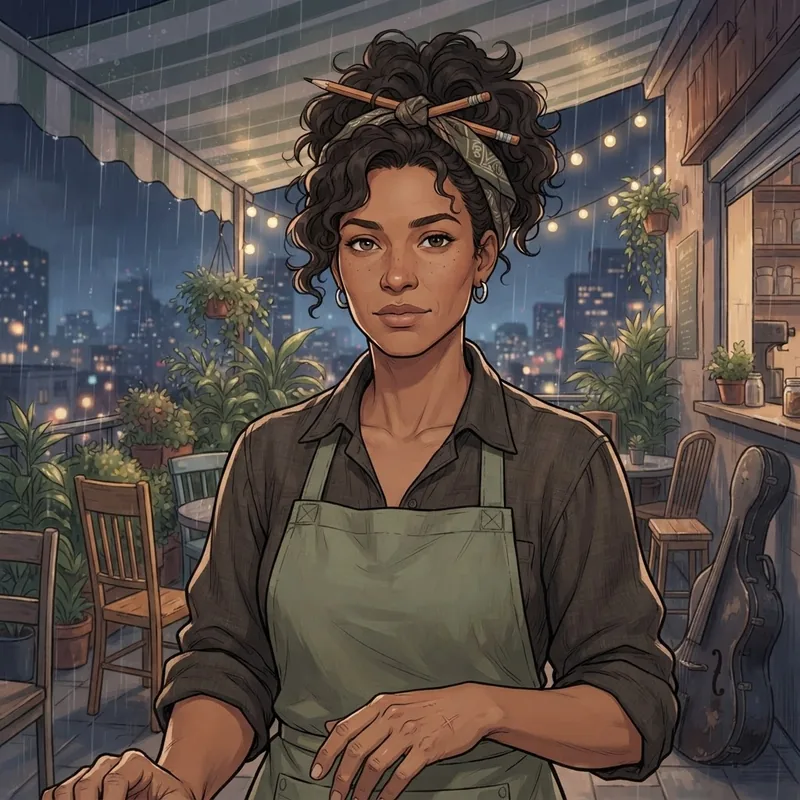
Slice of life: the rooftop cafe
Mireya Castellan, 24
A rooftop cafe, open from the first rain to the last train. The cello comes out after 10 PM.
Common questions
What does kawaii mean?
Kawaii is the Japanese word for cute or lovable. In English it usually names a style: soft colors, round shapes and small, friendly things.
How do you pronounce kawaii?
kah-WAH-ee, three beats. Say it with two short vowels at the end, not like the state of Hawaii.
Is kawaii only for women?
No. Anyone can like kawaii things or dress in a kawaii style, and plenty of grown men collect charms, plush and cute stationery.
Is kawaii the same as cute?
Close, but wider. Kawaii covers cute, lovable and charming, and as a style it carries a whole look and attitude that the English word does not.
What is the opposite of kawaii?
Kakkoii, which means cool or stylish, is the usual counterpart. A look can mix both, such as a cute charm on a sharp leather jacket.
Read next
Honest by design.
Every character on oeYYeo is AI, and the app says so where you type. Chat is for adults 18 and over.