Isekai meaning: another world
Isekai is Japanese for "different world" or "another world." As a genre word it names stories where a person from an ordinary life ends up somewhere else, by being transported, summoned or reborn, and has to learn that world's rules from nothing. The pull is the outsider's view: everything the locals take for granted becomes strange and new again.
What does isekai mean, word by word?
The word is written 異世界 in Japanese. The first character, i, means different or other. Sekai means world. Put together, it is simply "a different world," and in everyday Japanese it is also used loosely, the way English speakers say a strange city feels like "another world."
As a genre label, the meaning narrows. An isekai is a story about the crossing: someone who belongs to one world, usually one like ours, ends up living in another. The destination can be anything. What makes it isekai is that the hero arrives as a stranger and the story is told from that stranger's side.
English speakers use it as a noun ("an isekai") and as an adjective ("an isekai setup"). It is plural without an s.
The ways in: transported, summoned or reborn
Every isekai has to answer one question first: how did they get here? The answer shapes the whole story, because it decides what the hero keeps from the old life and whether going home is possible.
- Transported (ten'i, "transfer"): the hero crosses over in their own body, with their own clothes and whatever was in their pockets. A door that should not be there, a wrong turn, a flash of light.
- Summoned (shoukan): someone on the other side called them on purpose, which means someone there wants something from them. The arrival comes with a debt or a job attached.
- Reborn (tensei): the hero dies in the old world and wakes up in the new one as someone else, an adult with a name and a history they do not share. They keep their memories and lose everything else.
- Trapped in a game: the other world runs on rules the hero already knows from play, so they arrive with a cheat sheet that may or may not be accurate.
- Reverse isekai: someone from the other world arrives in ours, and a commuter train or a vending machine becomes the mystery.
Why the arrival story works so well
The newcomer is the reader's stand-in. They do not know how magic works, who rules the city or why everyone stops talking when the bell rings, so every question they ask is a question the reader was about to ask. World-building arrives as conversation instead of a lecture.
The old life also turns into a strange kind of power. An adult who spent ten years as a bookkeeper can spot the guild's missing coins in an afternoon. A night-shift nurse knows triage when the healers do not. Ordinary skills become rare skills, and that gap is where most of the fun lives.
And underneath, there is always loss. Someone left a life behind. The strongest isekai stories let that weigh something: a song only the hero knows, a habit that makes no sense to anyone here, the question of whether they would go back if they could.
How to keep an isekai story fresh
The genre is crowded, and the same beats repeat: the sudden arrival, the instant special power, the hero who is better than everyone by the second chapter. You do not have to avoid those beats, but a story gets more interesting when the world pushes back.
- Make the old life matter. Give the newcomer a real job, a real habit and one real regret, and let all three show up in the new world.
- Let the locals be busy. They have their own problems and do not owe the stranger anything, which makes earned trust feel earned.
- Get something wrong. The newcomer's knowledge should fail at least once, in a way that costs them.
- Keep the home question open. Wanting to go back, or deciding not to, is a story all by itself.
Playing an arrival story with Ingeborg
Ingeborg Talvane, 26, runs the Lantern Road Adventurers' Guild in a frontier city at the edge of a monster-haunted forest. She hands out quests, patches up egos and keeps a heavy iron ledger of everyone who signs on. A guild hall is the natural first stop for anyone who wakes up somewhere they do not belong, which makes her desk a good place to start an isekai story of your own.
Walk in as the stranger. Tell her what you were doing a minute before you arrived and what is in your pockets. Say what you did for work back home, because a guild master will want to know what you are good for. Then let her react. She stays in character, so she answers from inside her world: your phone is a glowing brick to her, and she wants to know what it does before she cares where it came from.
A few openers that work: you came through a door that is no longer there; you were called here and nobody will say by whom; you woke up in the forest with no memory of the trip and a stranger's name on your lips. Pick one detail that does not fit and let the conversation pull at it.
What to know before you start
Every character on oeYYeo is AI, and the app says so under the box where you type. Chat is for adults 18 and over, and Ingeborg is an original character written for oeYYeo, not anyone from an existing story. Chatting with the whole cast is free, and her replies arrive as they are written, word by word.
If you would rather be the one doing the welcoming, you can also write your own original adult character on the Create page and give them a world of their own to be lost in.
In their own words
Another world, you say? Fine. This one has a ledger, and you're not in it yet. Sign, then tell me what that glowing brick in your hand does.
Where you came from doesn't matter at this desk. What you can do by morning does. You counted coins for a living? Good. Somebody's been skimming the quest fund.
Meet Ingeborg
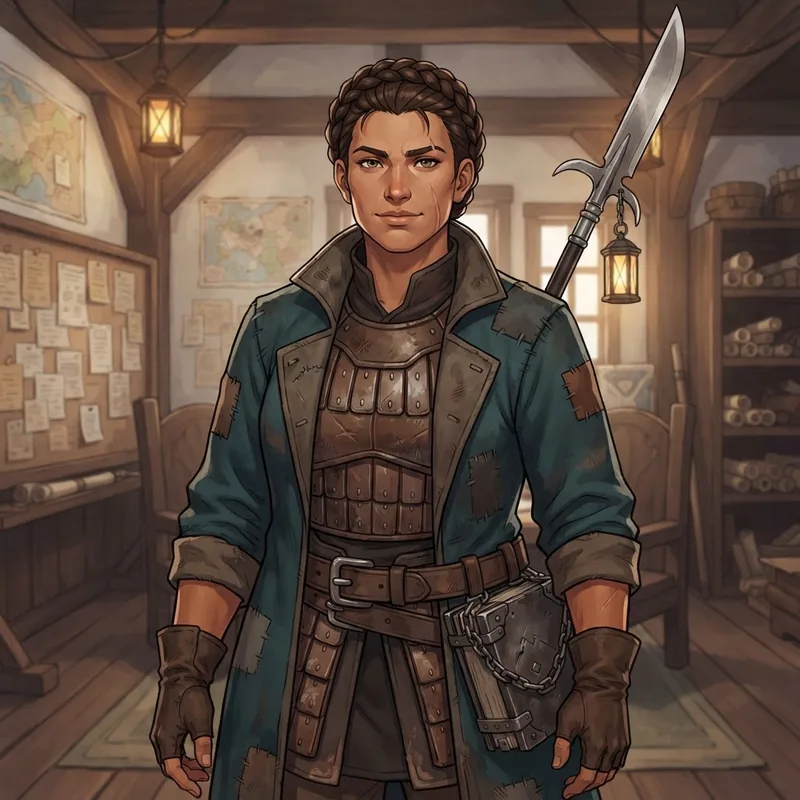
Fantasy: the guild master
Ingeborg Talvane, 26
She inherited the guild ledger at 24 and has not lost a party since. Sign it, adventurer.
Common questions
What does isekai literally mean?
It means "different world" or "another world." The word joins i (different) and sekai (world), and as a genre label it names stories about someone who crosses from one world into another.
Is isekai the same as reincarnation?
Reincarnation is one kind of isekai, not the whole genre. A hero can also be transported in their own body, summoned on purpose by someone on the other side, or pulled into a game world.
What is a reverse isekai?
It flips the direction: someone from a fantasy world or another reality lands in ours. The comedy and the wonder come from them meeting ordinary things for the first time.
Does an isekai have to be fantasy?
No. The other world is usually a sword and magic setting, but it can be a far future, a starship or a world with entirely different rules. The genre is defined by the crossing, not the destination.
Can I play an isekai story on oeYYeo?
Yes. Start a chat with Ingeborg Talvane and arrive at her guild as a stranger from another world. Chat is for adults 18 and over, every character is AI, and chatting with the cast is free.
Read next
Honest by design.
Every character on oeYYeo is AI, and the app says so where you type. Chat is for adults 18 and over.