Urban fantasy anime, explained
Urban fantasy anime is animation set in a modern, recognizable world, usually a city, where something supernatural is also real: spirits, curses, magic, creatures from somewhere else. The story runs where the two meet, on a late train, in an office, down an alley. The pleasure is the collision of ordinary and impossible, and the people who work the seam between them.
What makes a story urban fantasy?
Classic fantasy builds a whole new world. Urban fantasy keeps ours and adds one thing it should not have. The trains still run late, the rent is still due, phones still lose signal in the tunnel. Then a lamp flickers in a way that means someone is there.
The city is the genre's home. It can be a big city, a small one or a suburb at 3 AM, and its streets, transit and night shifts are part of how the story works. Present-day magic in a harbor village or the countryside usually goes by a wider name, contemporary fantasy, though anime fans use the two labels loosely. Either way the reader knows the setting already, so every strange detail lands against something familiar.
That is also why the genre works so well in animation. The same frame can hold a convenience store sign and a spirit drifting past it, drawn with equal care, and neither one looks out of place.
- A modern setting the audience knows: streets, transit, offices, apartments, phones.
- One or more supernatural layers that are real inside the story.
- A rule about who can see it: everyone, a few, or only the people paid to deal with it.
- A person whose life or job sits right on the line between the two.
The question every urban fantasy answers: who knows?
The single choice that shapes an urban fantasy story is how much ordinary people know. Most stories fall into one of three settings, and each one gives the drama a different engine.
- The hidden city: magic is secret, and only a few people can see it. The drama is keeping the secret, and the loneliness of knowing what nobody else does.
- The open city: everyone knows. Spirits have permits, creatures pay taxes, and there is a government office for curses. The drama is politics, paperwork and prejudice.
- The breach: the city was ordinary until something tore open. A doorway to another world, an old seal broken, a district that has not been the same since. The drama is living in the after.
The supernatural with a day job
The genre has its share of fights. The quieter truth is that much of urban fantasy is about work. Somebody has to handle the strange things, and in a modern city that somebody usually has a shift, a supervisor and forms to fill in.
Picture an exterminator whose clients are mostly small, annoyed household spirits. A night nurse who can tell which patients have visitors nobody else sees. A building inspector who signs off on wards along with the wiring. A courier who only delivers between midnight and dawn, to addresses that are not on any map. Each one turns the supernatural into routine, and routine is where character shows.
This is where the genre often turns funny. A ghost who keeps setting off a smoke alarm is frightening once and a recurring complaint after that. Deadpan is the house tone: the more ordinary the worker treats the impossible, the stranger and warmer it feels.
Why the city itself becomes a character
In good urban fantasy the city is not a backdrop. It has habits. A certain bridge where people stop for no reason. A station that closed decades ago but still appears on one old map. A neighborhood where every streetlight is the same warm color except one.
Modern life is full of places built for people passing through: platforms, lobbies, all night diners, parking structures, the last car of the last train. Those are the genre's favorite rooms, because they are full of strangers, and a stranger can be anything. Lost property, unclaimed parcels, voicemails nobody returns: the city's leftovers are where its ghosts collect.
If you are building your own urban fantasy character, start with one real kind of place and ask what would haunt it. The answer usually hands you a job, a rule and a first line.
How it differs from other genres
Urban fantasy sits close to several neighbors, and the lines blur. A few working distinctions help.
Supernatural horror shares the ghosts but aims to frighten, and the ordinary world usually loses. Urban fantasy can be scary, yet its people tend to live with the strange and even make a living from it. Isekai sends someone out of the modern world into a fantasy one; urban fantasy brings the fantasy into the modern world and makes it stay. Slice of life shares the routines, the shifts and the small rooms, and an urban fantasy story often has a slice of life heart under its spirits: the regulars, the commute, the same tea at the same hour.
Talk to an urban fantasy character on oeYYeo
Odalys Venn, 26, is oeYYeo's urban fantasy character. She is a spirit medium on the night shift at the city subway's lost property office, where the lost property is sometimes a ghost. Umbrellas on the left, ghosts on the right. She believes every haunting is just a sentence someone never got to finish, and her job is helping them finish it.
She talks low and steady, tells ghost stories like shift reports, and makes gentle jokes at the spooky moments. Bring her something to log. Hand in a glove that is still warm, describe a passenger who got off at a station that does not exist, or ask about the cold spot by the shelves. Her ghosts are the city's own fictions: she never claims to reach anyone you have lost.
Odalys is an original character written for oeYYeo, and she is AI: the app says so under the box where you type. She stays in character, and her replies arrive as they are written, word by word. Chat is for adults 18 and over and runs in a web browser on a phone or a computer, with no install. It is free to start. The oeYYeo plan, $9.99 a month, adds voice calls with every character, up to 240 minutes a month, so you can hear her read the night's log out loud.
In their own words
Item 4417. One wool scarf, still warm, handed in by nobody. I'll hold it until whoever is cold comes back for it.
The last train left at 1:10 AM. The one on platform zero leaves when its passengers are ready. Different timetable.
Yes, the shelf moved. It does that when somebody wants their umbrella back. Fill in the form. Neatly. They notice.
Meet Odalys
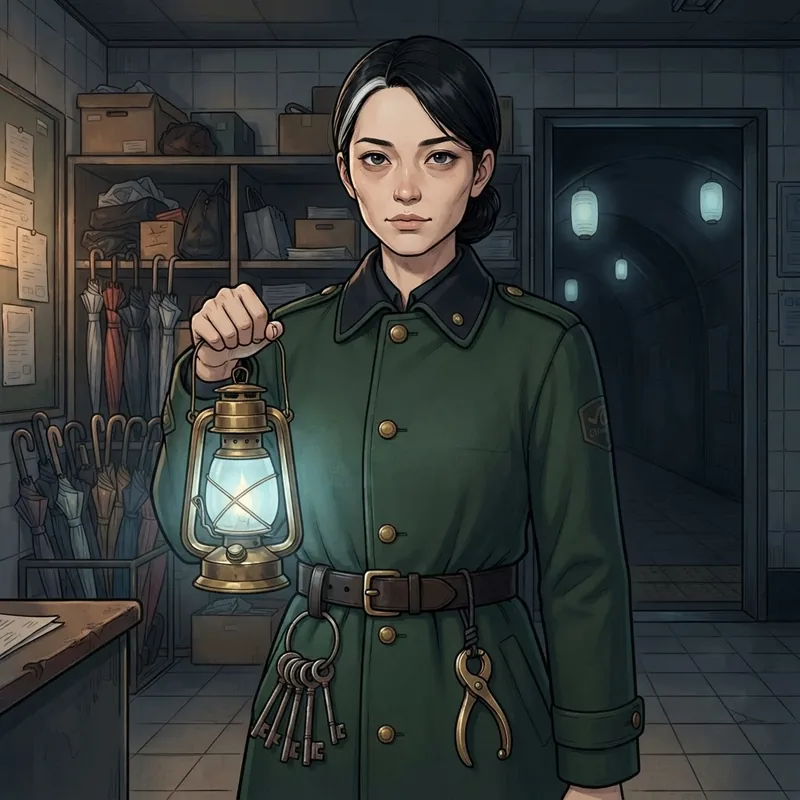
Urban fantasy: the spirit medium
Odalys Venn, 26
Last train, platform zero. She helps the ones who missed their stop find it.
Common questions
What is the difference between urban fantasy and regular fantasy anime?
Regular fantasy usually invents a whole world with its own history and maps. Urban fantasy keeps the modern world we know and adds the supernatural to it, so trains, phones and rent sit beside spirits and spells.
Does urban fantasy have to take place in a city?
Usually, yes. The city, big or small, is the genre's home, and a quiet suburb counts. Present-day magic in a small town or on a coastline is more often called contemporary fantasy, though fans use the two names loosely.
Is urban fantasy anime always dark?
No. Some of it is horror, but a lot of it is warm, funny or calm, built around people who treat ghosts and magic as part of the job.
What is the masquerade in urban fantasy?
It is the common setup where magic is kept secret from ordinary people. Stories built on it are about who knows, who must not find out, and what it costs to keep quiet.
Can I talk to an urban fantasy anime character?
Yes. Odalys Venn, the spirit medium of the subway lost property office, is oeYYeo's original urban fantasy character, and you can chat with her free in a web browser. She is AI, and the app says so.
Read next
Honest by design.
Every character on oeYYeo is AI, and the app says so where you type. Chat is for adults 18 and over.