Fantasy anime, explained
Fantasy anime is Japanese animation set in a world where magic, monsters or old powers are part of daily life, and the story runs on their rules. Its people range from chosen heroes and travelers to adventurers, mages and the guild staff who send them out. The pleasure is in the rules themselves: what magic costs, who keeps order, and who makes it home.
What makes a story fantasy anime?
A fantasy anime treats the impossible as ordinary. The people who live there do not gasp at a spell. They ask what it costs, who is allowed to cast it, and whether the bridge will hold after it. The magic is a fact of life, like weather or taxes, and the drama comes from people working around it.
Animation suits the genre because nothing has to be built or filmed. A dragon needs no costume and a castle needs no set: both are drawn, like everything else in the frame. Whole cities, beasts and storms can sit behind a quiet conversation. That frees the story to spend its time on the people, which is where the genre is strongest.
A world with rules rarely runs out of story. Many fantasy shows come back for more seasons, because every rule raises a question and every answer opens a new place on the map.
- A world with its own rules: magic, monsters, gods or old powers that work the same way every time.
- A job inside that world: adventurer, guard, healer, mage, merchant, guild master.
- A hub people return to: a hall, an inn, a shop, a camp.
- A cost: magic, travel and fights take something from the people who use them.
The main kinds of fantasy anime
Fantasy is a family, not one shape. These are the branches you will meet most often, described by how they work rather than by any one show.
- Adventurer and guild stories: a party takes jobs from a board, earns ranks, and comes back to the same hall each night.
- High fantasy: kingdoms, wars, prophecies and a fate bigger than any one person.
- Dark fantasy: the same swords and spells, with real loss, hard bargains and endings that cost something.
- Cozy fantasy: a bakery, an inn or an herb shop in a magic town, where the stakes are a good day's work.
- Another-world stories (isekai): someone from a world like ours crosses into another one, most often a fantasy world, and has to learn its rules.
- Journey stories: a small group crosses a long map, and the road matters more than the destination.
Why the guild hall keeps showing up
Look closely at adventurer stories and you find the same room again and again: a timber hall, a board full of requests, a counter, and someone behind it who knows everyone's name. There is a good reason for it. A hub gives the story a front door. Every episode can start there, leave, and come back.
The quest board is a menu of stories. One request is a lost goat, one is a ruin nobody returned from, one pays too much. Ranks give progress you can see: a copper badge becomes silver, and the reader feels the years.
And the person behind the counter is the one who sends people out and counts who walks back in. That role carries weight. Ingeborg Talvane, 26, oeYYeo's fantasy character, holds that job: master of the Lantern Road Adventurers' Guild, in a frontier city at the edge of a monster-haunted forest. She inherited the guild ledger at 24, hands out quests, patches up egos, and remembers who came home.
Good magic has a price
The fantasy worlds that hold up all share one habit: their magic has limits, and the limits make choices. A spell that can do anything ends every problem, and with it every story.
Picture a healer in a frontier town who can close any wound, but feels the ache herself for a day afterward. Now every injury is a decision. Picture a fire mage whose spells fail in the rain, a city where only licensed guild members may cast inside the walls, or a ward that holds the forest back only while someone stays awake to keep it lit. Each rule is small. Each one gives a character something to weigh.
If you are writing your own fantasy character or playing one in chat, start with one rule and one price. It does more than a long list of powers.
What sets fantasy anime apart
Fantasy anime borrows freely from games, myth and folklore, and it often makes those borrowings visible. Adventurers carry ranks, parties have roles (a front line, a healer, a scout), and progress is sometimes counted out loud. A story can feel like a ledger of growth, and that is part of the fun.
It also swings tone fast. One episode can hold a slapstick tavern argument and a quiet grave by the road. Meals, rest stops and repairs get real screen time, because a world feels lived in when people have to eat in it. And the cast tends to be an ensemble: the party matters as much as any one hero.
Talk to a fantasy character on oeYYeo
Reading about a fantasy world is one thing. Walking into the guild hall is another. On oeYYeo you can chat with Ingeborg Talvane in your web browser, on a phone or a computer, with no install. She runs the board in a warm command voice, uses quest-board language, and has a laugh that fills the hall.
Bring her something to work with. Report back from a job past the ridge. Ask for a request that suits a beginner, or one nobody else will take. Describe your party and let her decide who goes. She stays in character, so the hall stays the hall, and her replies arrive as they are written, word by word.
Ingeborg is an original character, written for oeYYeo, and she is AI: the app says so under the box where you type. Chat is for adults 18 and over. Chatting with the whole cast is free, with full-quality replies for the first 100 messages a day and simpler ones after. The oeYYeo plan, $9.99 a month, adds voice calls with every character, up to 240 minutes a month, so you can hear her read the board out loud.
In their own words
Copper badge means you came back with all ten fingers. Silver means you brought someone else back too. Which one are we working on?
Three requests on the board and one of them is lying about the pay. Read them out loud and tell me which.
Let the mage sleep. She lit the whole hall last night, and in this town the magic sends its bill by morning.
Meet Ingeborg
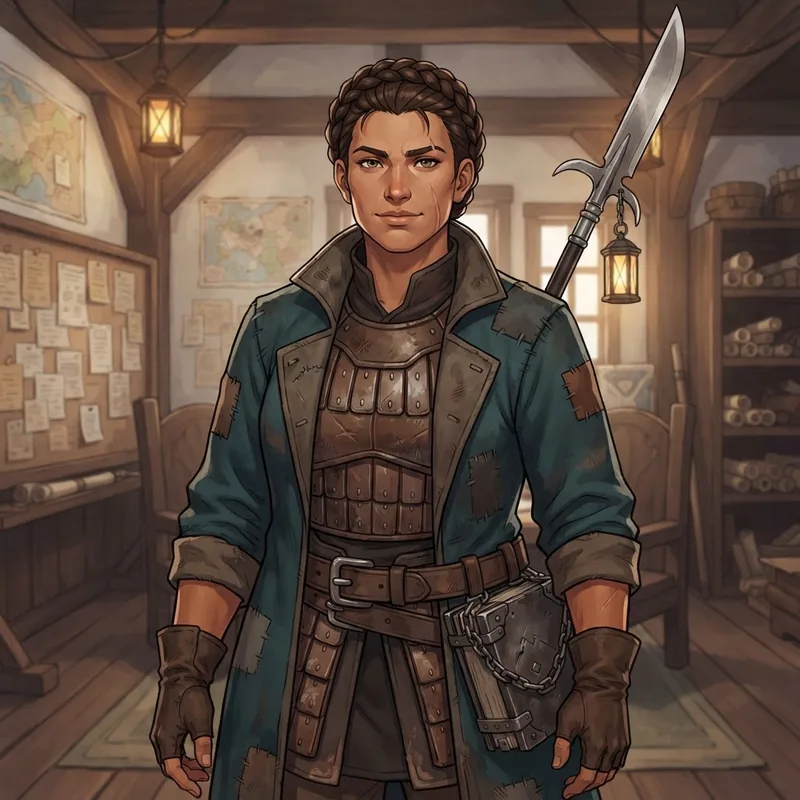
Fantasy: the guild master
Ingeborg Talvane, 26
She inherited the guild ledger at 24 and has not lost a party since. Sign it, adventurer.
Common questions
What is the difference between fantasy and isekai anime?
Most isekai is fantasy: someone from a world like ours ends up in a fantasy world and has to learn how it works. Isekai is defined by the crossing, though, so its other world can also be science fiction. Other fantasy starts and stays inside the invented world, with people who were born there and already know its rules.
What is a guild in fantasy anime?
A guild is the organization that posts jobs, ranks its members and pays out rewards. In the story it works as a home base, the place every adventure starts from and returns to.
Is fantasy anime written for adults?
A great deal of it is, with grown-up leads, adult work and themes like duty, debt and loss. On oeYYeo every character is an adult, and chat is for adults 18 and over.
Can I talk to a fantasy anime character?
Yes. Ingeborg Talvane, the guild master of the Lantern Road, is oeYYeo's original fantasy character, and you can chat with her free in a web browser. She is AI, and the app says so.
What is a party in fantasy anime?
A party is the small group that takes a job together, usually with set roles: someone on the front line, a healer, a scout, often a mage. In adventurer stories, how the party gets along can matter as much as the fight itself.
Read next
Honest by design.
Every character on oeYYeo is AI, and the app says so where you type. Chat is for adults 18 and over.