What does shojo mean?
Shojo (said SHOH-joh) is the Japanese publishing label for manga, and the anime adapted from it, first printed in magazines for girls.
- The word means girl.
- It names a readership, not a genre.
- Its stories lean on feelings, relationships and inner life.
- Its art is known for flowing, decorative pages and expressive faces.
- Also written shoujo.
Talk it through with Mireya
Shojo vs shonen vs seinen vs josei
Shojo is one of four labels Japanese publishers use to sort manga by who a magazine was first printed for. Its partner is shonen, the boys' label; seinen and josei are the labels for grown men and grown women. An anime usually carries the label of the manga it adapts.
The table lines the four up. Every cell is a tendency, not a rule: shojo magazines have printed horror, sports, science fiction and mystery for decades.
| Feature | Shonen | Shojo | Seinen | Josei |
|---|---|---|---|---|
| Said | SHOH-nen | SHOH-joh | SAY-nen | JOH-say |
| Literal meaning | boy | girl | young man | woman |
| First printed for | boys | girls | adult men | adult women |
| Typical focus | Action, rivals, training, friendship | Feelings, relationships, inner life | Work, consequences, moral gray areas | Everyday adult life, careers, relationships |
| Typical tone | High energy and hopeful | Emotional and expressive | Measured, often darker | Grounded and realistic |
| Art tendencies | Bold motion lines, big action panels | Decorative, flowing pages, expressive faces | Detailed, realistic proportions | Clean, understated, realistic |

What does shojo mean, word by word?
Shojo is written 少女 in Japanese. The first character means few, the same one that opens shonen, and the second means woman, so the word reads young woman or girl. In everyday Japanese it is the ordinary word for girl. In publishing it is the name of a market.
Say it SHOH-joh. The first o is long, the second short, which is why you also see shoujo or shōjo. They are one word with three spellings.

What makes a story feel shojo?
Shojo is where manga learned to put feelings on the page. The habits that grew up in these magazines have spread everywhere since, but this is where they are strongest:
- The inside of a moment. A single glance can take a whole page, with the character's thoughts floating beside the art.
- Relationships as the plot. Friendships, families, rivals and first loves drive the story more than any battle.
- Flowing pages. Panels break their borders, backgrounds turn to flowers, light or pattern to show a mood, and the layout moves like music.
- Expressive faces. Eyes and hands carry most of the emotion, drawn large and detailed so you can read them.
- Kindness with a spine. The heroes are often gentle, and the story tests how much that gentleness can hold.
Shojo is a readership, not a genre
Because the art style is so recognizable, people sometimes use shojo to mean a look or a mood. Strictly, it only says which magazine a story first ran in. Shojo magazines have printed fantasy epics, ghost stories, sports drama and science fiction, and some of the most influential storytellers in manga built their careers there.
Romance is a big part of the category, but it is far from all of it. Plenty of shojo is about a friendship, a family, a craft or a calling, and the romance, when there is one, is one thread among several.
And like every demographic, the real audience is wider than the label. Adults read shojo, men read shojo, and readers who grow up with it often carry on into josei.
How to write a shojo-style scene
Pick one feeling and slow it down. A shojo scene is not about what happens so much as what it feels like while it happens: the second before an apology, the walk home after good news, the silence when a friend finally says the true thing.
Let the world reflect the mood. Rain for regret, the first warm evening for relief. Then let a small, specific gesture carry the meaning, a hand on a cup, a coat offered without a word.
Talking about feelings on oeYYeo
No oeYYeo character comes from a magazine, but Mireya Castellan shares the emotional attention shojo is known for. She is 24 and runs The Awning, a tiny cafe on a city rooftop, and she notices the weather on your coat before you have noticed your own mood. Bring her the small thing that is weighing on you and she will slow it down with you.
Every character on oeYYeo is AI, and the app says so under the box where you type. Chat is for adults 18 and over, and chatting with the whole cast is free.
In their own words
Wait, you said fine twice, and the second one was smaller. Sit, sit. Tell me the real version.
You don't have to fix it tonight. Tonight you just have to say it out loud once.
Meet Mireya
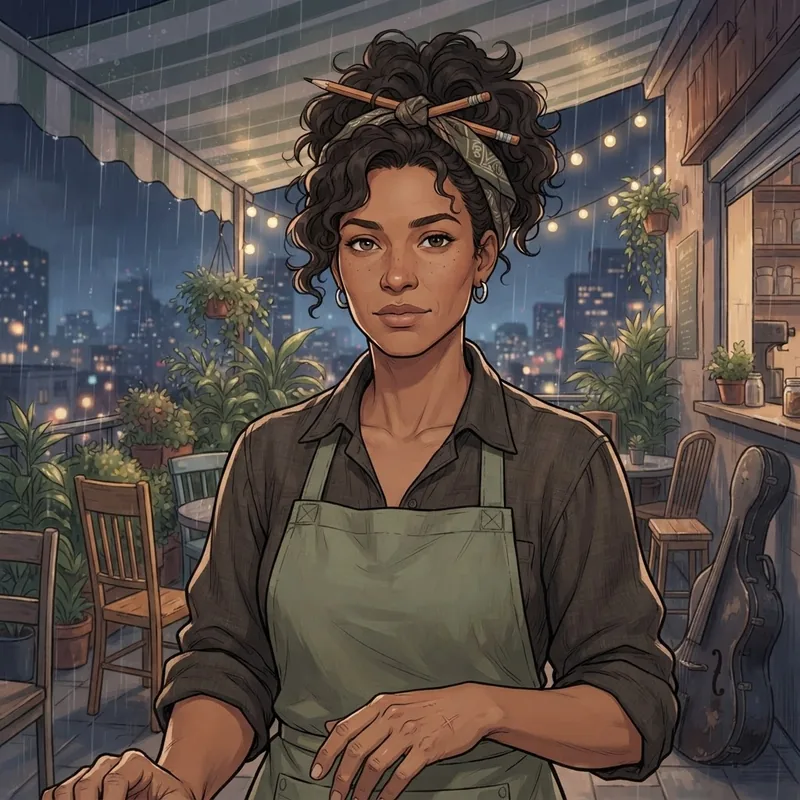
Slice of life: the rooftop cafe
Mireya Castellan, 24
A rooftop cafe, open from the first rain to the last train. The cello comes out after 10 PM.
Common questions
Is shojo the same as romance?
No. Romance is common in shojo, but the category also covers fantasy, horror, sports, mystery and stories about friendship and family.
How do you pronounce shojo?
SHOH-joh. The first o is long, the second short, which is why it is also spelled shoujo.
What is the difference between shojo and josei?
Josei is printed for adult women and tends toward grounded stories about work, independence and adult relationships. Shojo tends toward heightened emotion and a more decorative art style.
Read next
Honest by design.
Every character on oeYYeo is AI, and the app says so where you type. Chat is for adults 18 and over.